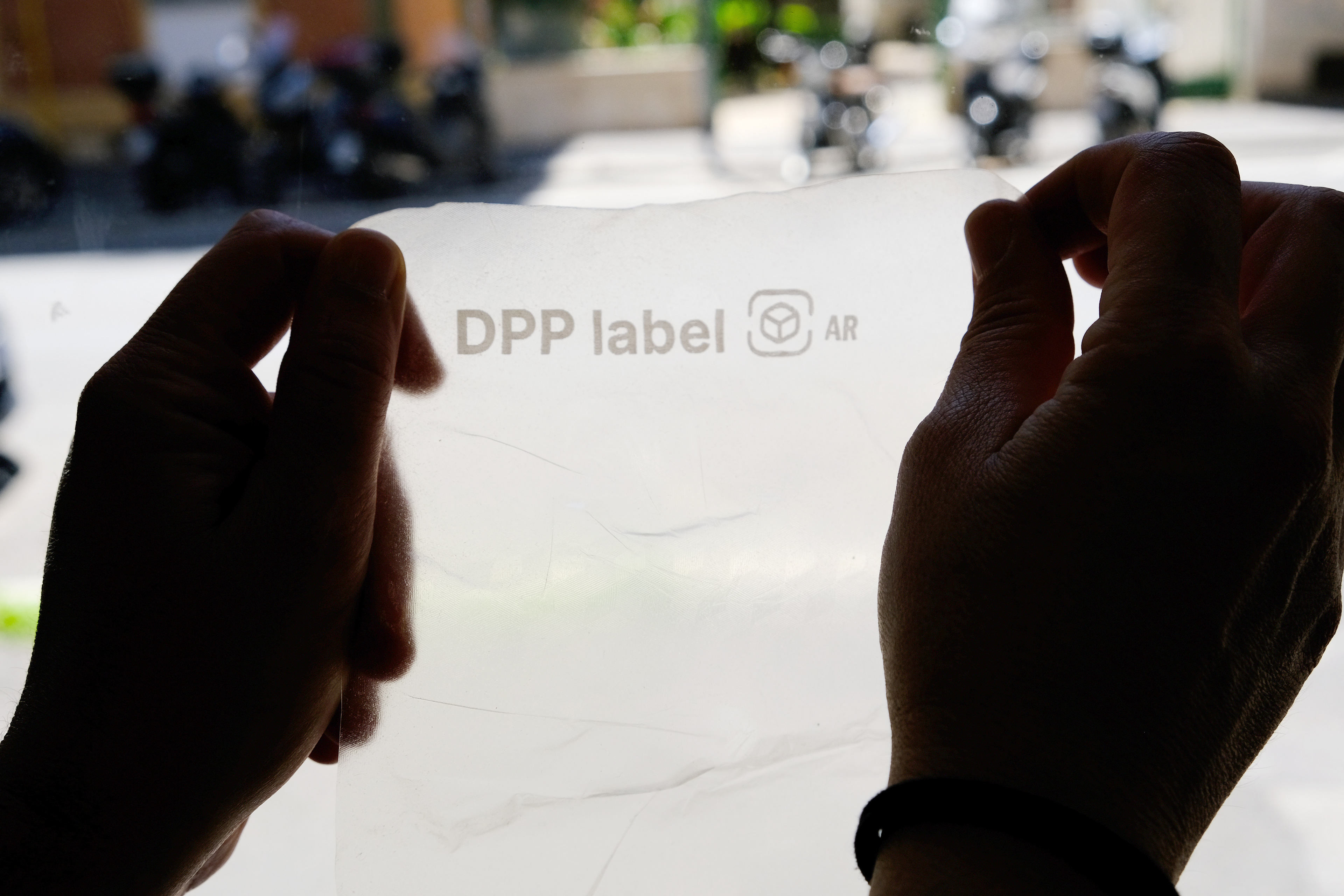
Overview
Digital Product Passports (DPP) are emerging as a key enabler for transparency, traceability, and sustainability across industries. As regulations evolve and supply chains become more complex, products are no longer defined solely by their physical form, but by the data that accompanies them throughout their lifecycle.
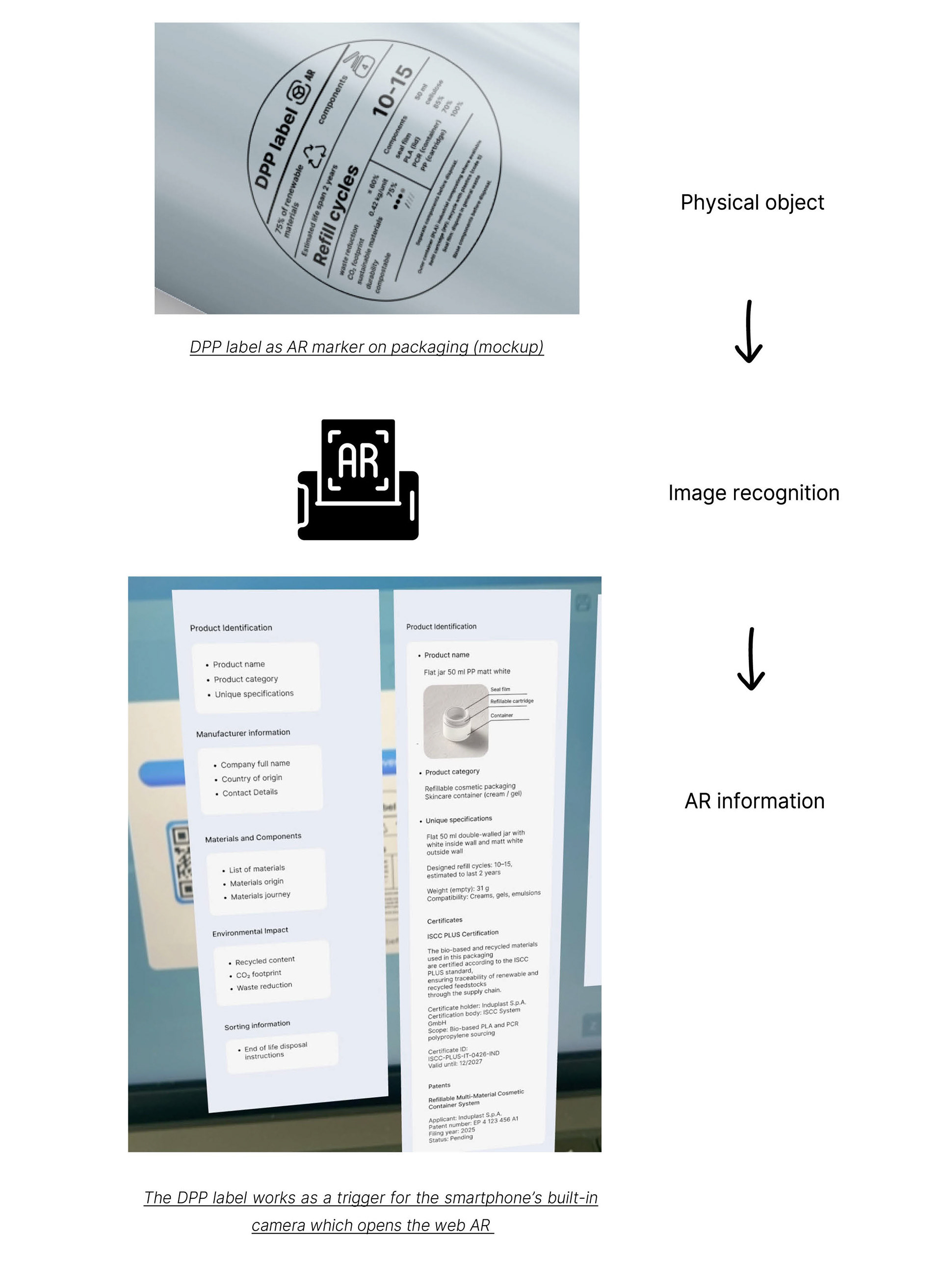
To achieve this, a system architecture of three layers was defined; physical object, image recognition system and AR information layer.
The thesis dives in the entire process of applying scannable DPP labels onto a variety of materials, including bioplastic, as well as creating AR interfaces for the necessary technical information focusing on refillable cosmetic packaging.
Emphasis on sustainability
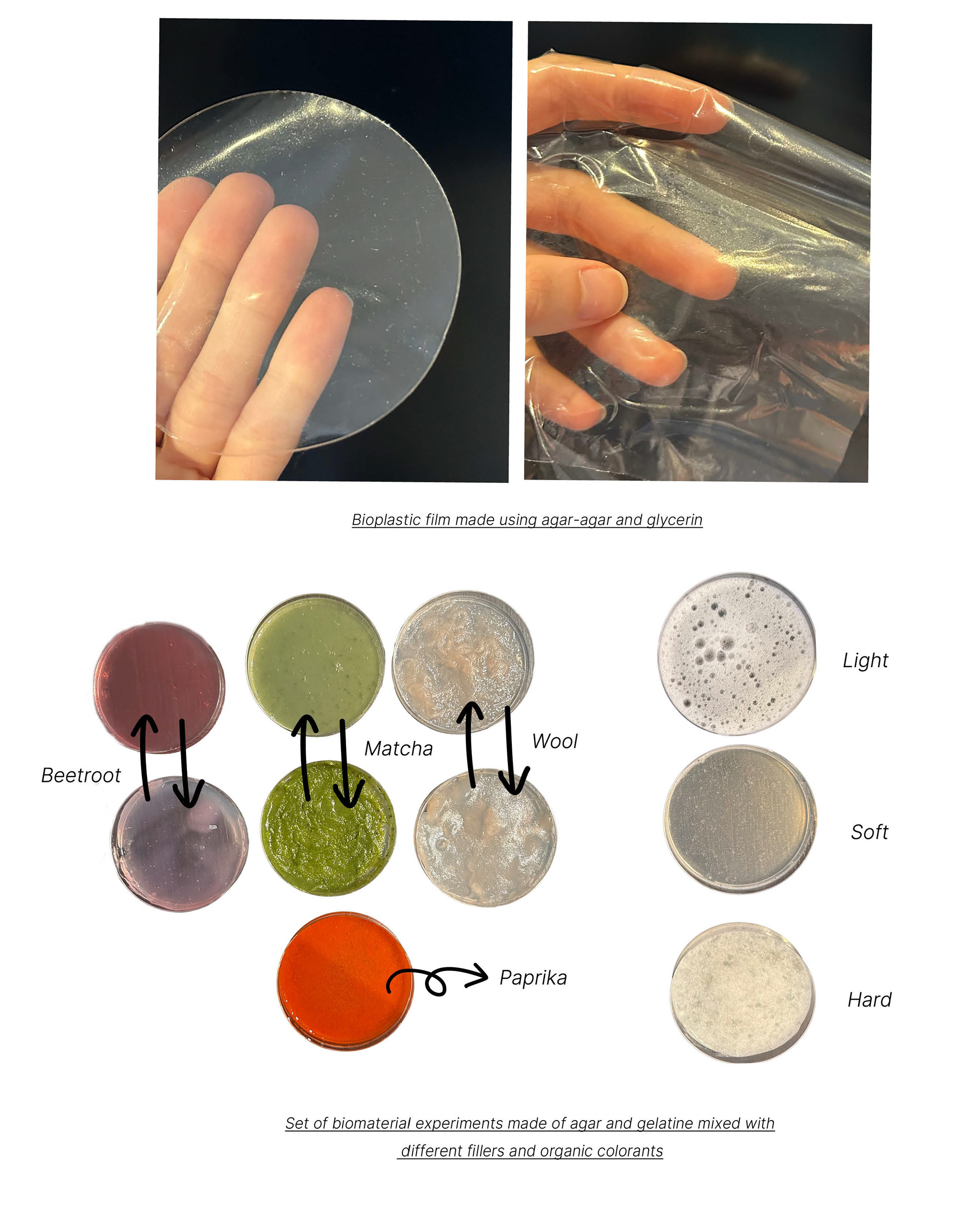
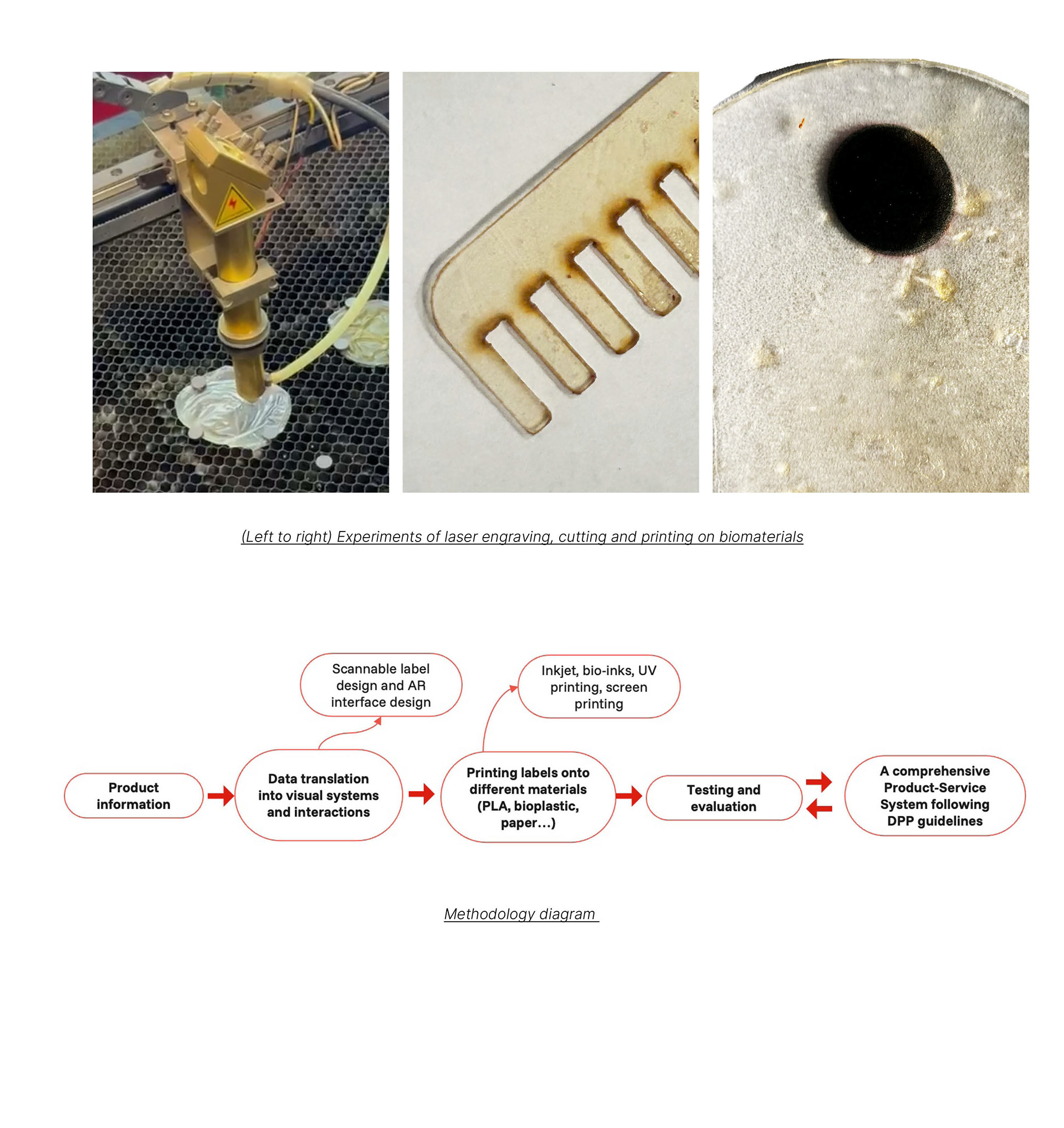
Bioplastics were developed and tested to explore more sustainable material alternatives for packaging applications. The experiments focused on understanding material behavior, processing constraints, and performance in relation to real-world use. Beyond material substitution, the research investigates how bioplastics can be integrated into DPP-s, enabling transparent documentation of composition and end-of-life pathways.
Through material experimentation, bioplastics can be not just a sutainable solution, but a part of a broader system that supports informed decision- making and circular material flows.
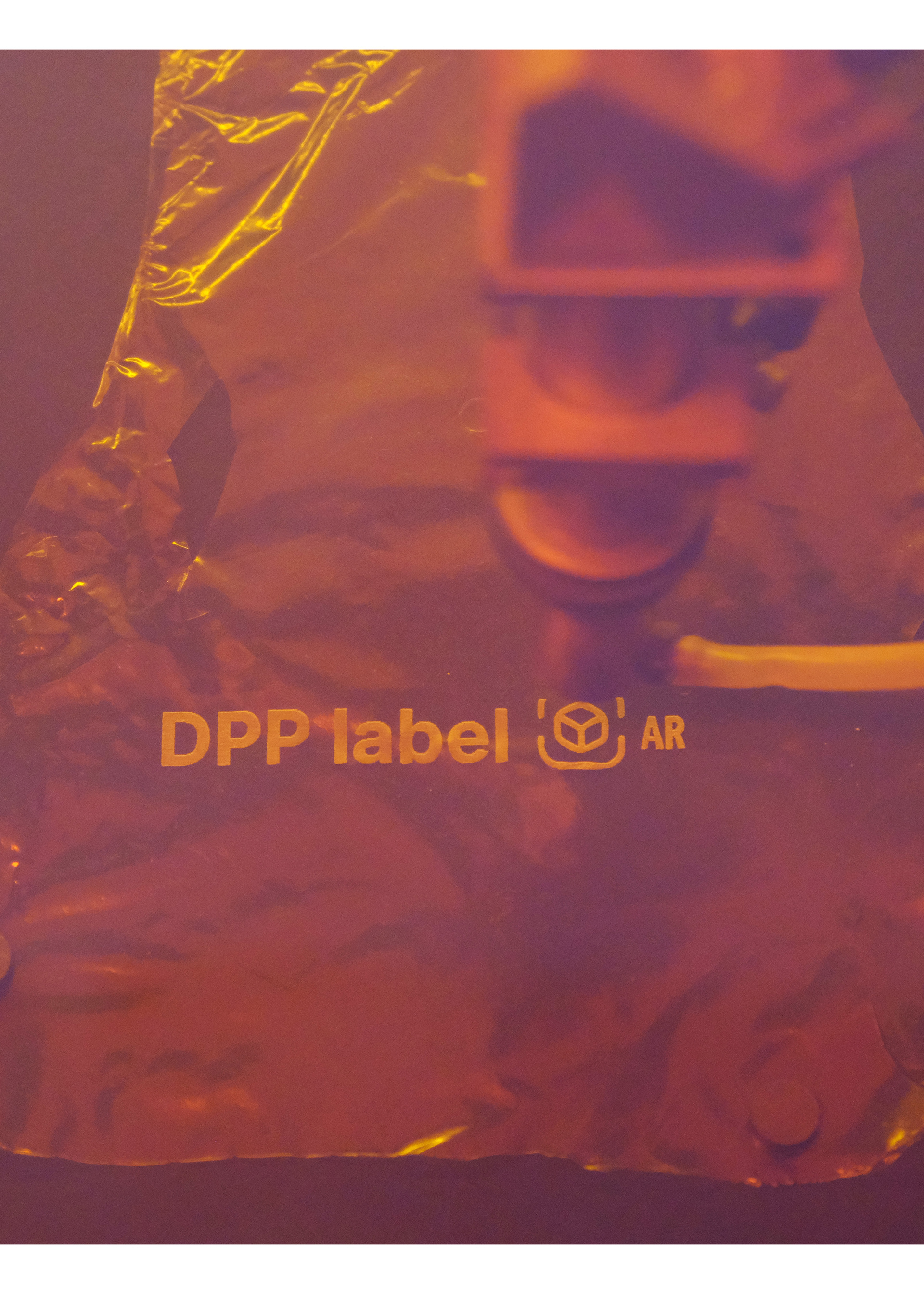
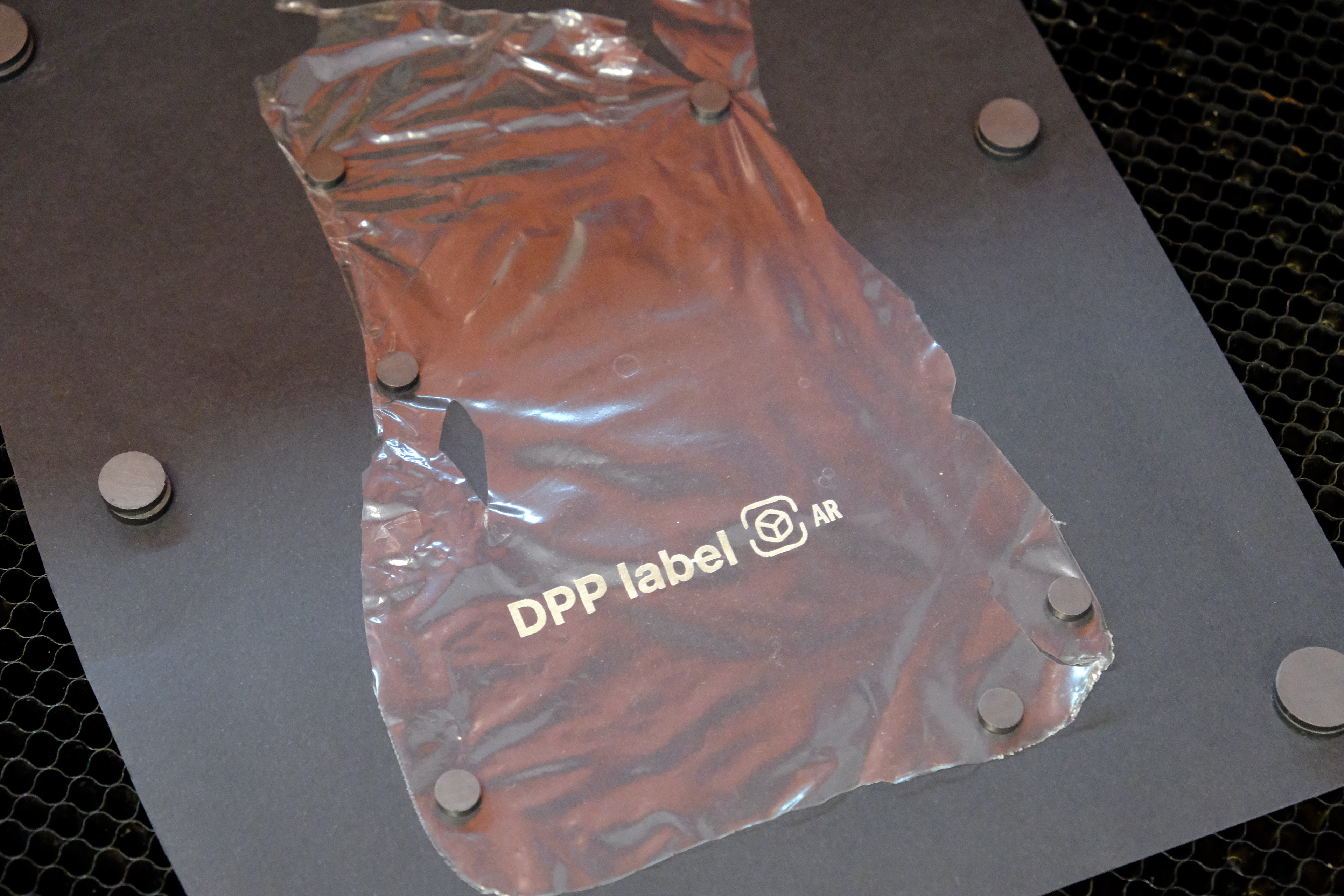
Laser engraving the design on bioplastic film
Research objectives and goals
Objectives include testing different printing techniques (traditional and digital) for applying DPP labels on various materials, evaluating AR data visualization and their overall understanding among users.
The end goal is to develop a framework that can serve as a foundation for real-world implementation supporting standardized practices across packaging systems and facilitating integration into existing industrial processes.
This thesis research is being conducted under mentorship at Sapienza University of Rome, where I am finishing my Master studies in the frame of the Erasmus+ programme